![]() |
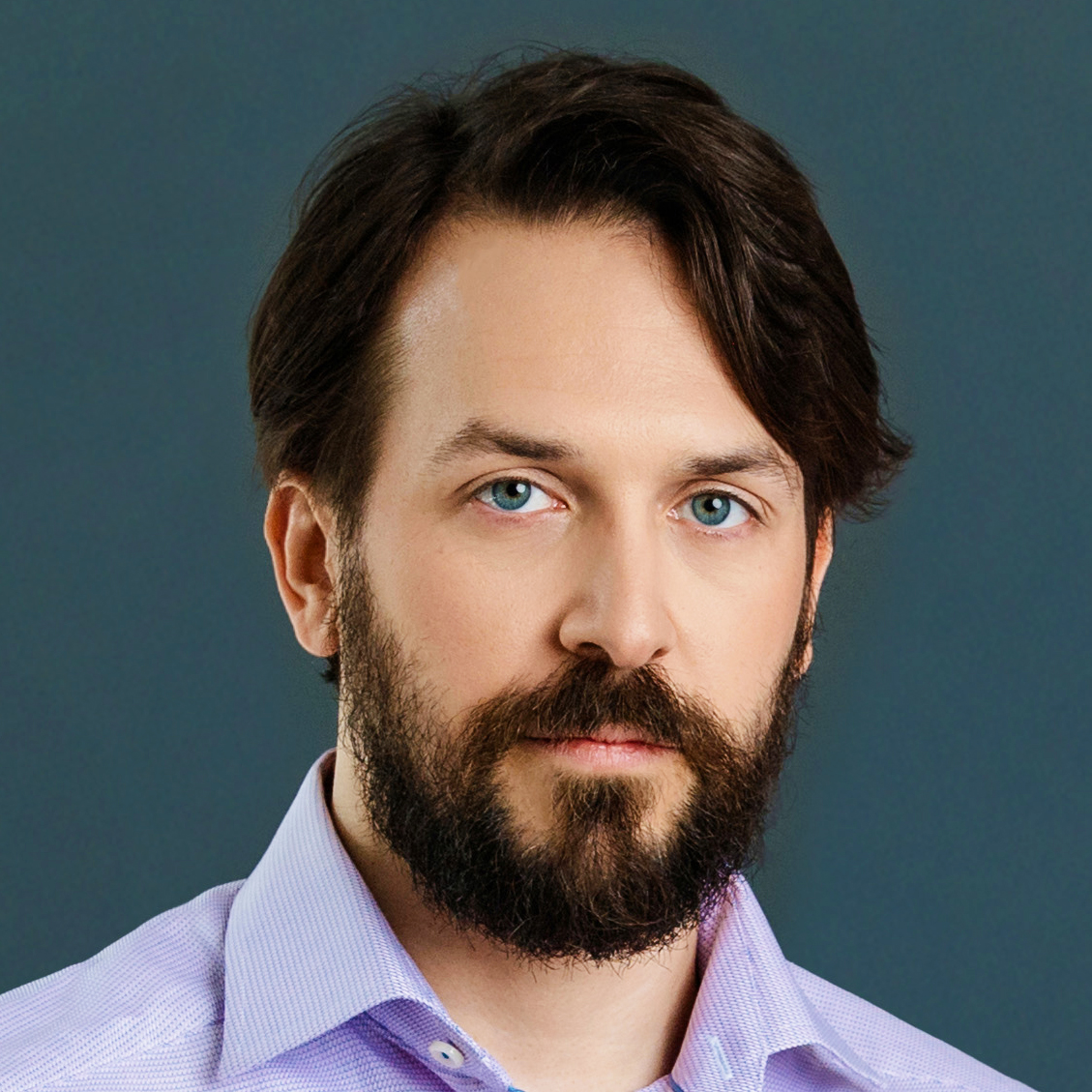
Luke Muehlhauser | Executive Director
Luke Muehlhauser joined MIRI in 2011 as a researcher, but was quickly appointed Executive Director. He has written dozens of articles and papers on metaethics, intelligence explosion theory, and the cognitive science of rationality and human motivation, including “Intelligence Explosion: Evidence and Import” and “A Crash Course in the Neuroscience of Human Motivation.” He was also the author of MIRI’s first strategic plan. Previously, he studied psychology at the University of Minnesota. |
![]() |
Louie Helm | Deputy Director
Louie Helm supports organizational development, strategic planning, and talent recruitment at MIRI. He has written several articles to help guide future donors and researchers including “How to Save the World” and “Recommended Courses for MIRI Researchers.” He also co-authored “Intelligence Explosion and Machine Ethics” with Luke Muehlhauser, which appears in the academic volume Singularity Hypotheses (Springer, 2013). Louie holds a Masters in Computer Science from the University of Texas at Austin and has published peer-reviewed research in applied mathematics, quantum computing, and machine ethics. |
![]() |
Eliezer Yudkowsky | Research Fellow
Eliezer Yudkowsky is the foremost researcher on Friendly AI. In 2001 he published the first analysis of motivationally stable goal systems, with his book-length Creating Friendly AI. He has since written many other papers, including two chapters in the edited volume Global Catastrophic Risks (Oxford, 2007): “Cognitive Biases Potentially Affecting Judgment of Global Risks” and “AI as a Positive and Negative Factor in Global Risk.” He is also well known for his writings on rationality, including “An Intuitive Explanation of Bayes’ Theorem,” the Less Wrong Sequences, and Harry Potter and the Methods of Rationality. |
![]() |
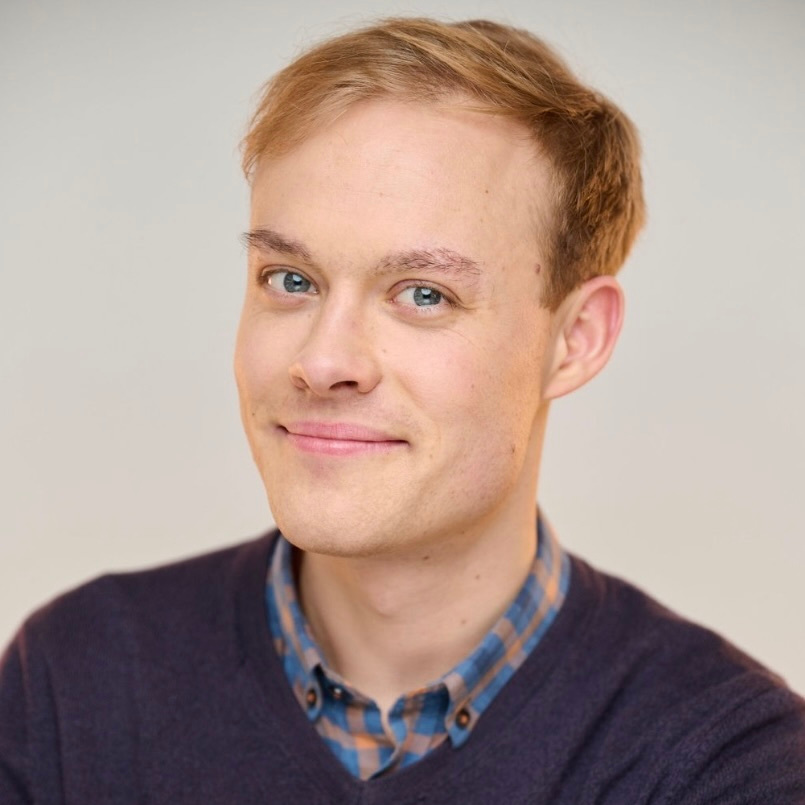
Carl Shulman | Research Fellow
Carl Shulman has authored and co-authored several papers on artificial intelligence and whole brain emulation, including “How Hard is Intelligence?”, “Whole Brain Emulation and the Evolution of Superorganisms,” and “Implications of a Software-Limited Singularity.” He attended New York University School of Law and holds a BA in philosophy from Harvard University. |
![]() |
Malo Bourgon | Project Manager
Malo Bourgon works as a dedicated Project Manager, MIRI’s Volunteer Manager, and the primary contact for new job applicants, potential interns, visiting fellows and other interested individuals. Malo holds a Masters in Engineering from the University of Guelph. |
![]() |
Alex Altair | Research Associate
Alex Altair researches trusted reasoning formalisms for autonomous systems. He published “A Comparison of Decision Algorithms on Newcomblike Problems” and co-authored the “Intuitive Explanation of Solomonoff Induction”. He graduated from the Maine School of Science and Mathematics, and studied physics and mathematics at university. |
![]() |
Mihaly Barasz | Research Associate
Mihaly Barasz is interested in functional languages and type theory and their application in formal proof systems. He cares deeply about reducing existential risks. He has an MSc summa cum laude in Mathematics from Eotvos Lorand University, Budapest and currently works at Google. |
![]() |
Paul Christiano | Research Associate
Paul Christiano recently finished an undergraduate degree in mathematics at MIT and is now a graduate student at UC Berkeley. His research on algorithms and cryptography has been presented at top conferences in theoretical computer science. In 2008 he was one of six students to represent the U.S. at the International Mathematics Olympiad. He is also the lead author of MIRI research paper “Definability of Truth in Probabilistic Logic.” |
![]() |
Daniel Dewey | Research Associate
Daniel Dewey works on the theory of artificial general intelligence. His current research focuses on optimality notions for physically implemented AGI, motivated self-deception, and goal safety. Daniel has a BSc in Computer Science from Carnegie Mellon University. You can find more of his work at danieldewey.net. |
![]() |
Benja Fallenstein | Research Associate
Benja Fallenstein is interested in the basic research necessary for the development of safe AI goals, especially from the perspective of mathematical models of evolutionary psychology, and also in anthropic reasoning, decision theory, game theory, reflective mathematics, and programming languages with integrated proof checkers. Benja researches mathematical models of human and animal behavior at Bristol University, as part of the MAD research group and the decision-making research group. |
![]() |
Joshua Fox | Research Associate
Joshua Fox studies the theory of superintelligence, developing models of agents with greater than human optimization power. He has served as a software architect at various start-ups and growth companies, and now works at IBM leading the development of a major software products. He holds a BA summa cum laude in mathematics from Brandeis University and a PhD from Harvard University. |
![]() |
Anja Heinisch | Research Associate
Anja Heinisch holds a Masters of Science with a major in mathematics and a minor in computer science from the university of Braunschweig in Germany. Her Bachelor’s Thesis was on cryptography and her Master’s Thesis expanded some results in algorithmic group theory. Her research interests also include parallel computing, verification and stability of goal systems, and probabilistic graphical models. She spends most of her free time buried in books about mathematics, cognitive science, and formal epistemology. |
![]() |
Marcello Herreshoff | Research Associate
Marcello Herreshoff has worked with MIRI on the math of Friendly AI from time to time since 2007. In high school, he was a two time USACO finalist and he published a novel combinatorics result, which he presented at the Twelfth International Conference on Fibonacci Numbers and Their Applications. He holds a BA in Math from Stanford University. At Stanford he was awarded two honorable mentions on the Putnam mathematics competition, and submitted his honors thesis for publication in the Logic Journal of the IGPL. His research interests include mathematical logic and its use in formalizing coherent goal systems. |
![]() |
Bill Hibbard | Research Associate
Bill Hibbard is an Emeritus Senior Scientist at the University of Wisconsin-Madison Space Science and Engineering Center, currently working on issues of AI safety and unintended behaviors. He has a BA in Mathematics and MS and PhD in Computer Sciences, all from the University of Wisconsin-Madison. He is the author of Super-Intelligent Machines, “Avoiding Unintended AI Behaviors,” and “Decision Support for Safe AI Design.” |
![]() |
Patrick LaVictoire | Research Associate
Patrick LaVictoire is interested in the mathematics of decision theory: when different algorithms can read one anothers’ source code before choosing actions, there are some Gödelian strategies that provably do better than causal decision theory. Patrick has an AB in Mathematics from the University of Chicago and a PhD in Mathematics from the University of California at Berkeley, and is currently a Van Vleck Visiting Assistant Professor of Mathematics at the University of Wisconsin-Madison. |
![]() |
Vladimir Nesov | Research Associate
Vladimir Nesov is interested in developing decision theory as theoretical foundation for reasoning about human values and goal stability in artificial agents. He has an MSc in Applied Mathematics and Physics from Moscow Institute of Physics and Technology. He currently works as a software engineer specialized in compiler technologies. |
![]() |
Steve Rayhawk | Research Associate
Steve Rayhawk is a researcher interested in applying computational Bayesian decision theory to problems in technological forecasting, risk management policy, and social epistemology. He holds a degree from the mathematics program of the UC Santa Barbara College of Creative Studies. He previously has worked for several years at San Diego State University on statistical methods for the application of high-throughput bioinformatics to microbial ecology. He is working on identifying and projecting the development of technologies relevant to intelligence explosion scenarios. |
![]() |
Nisan Stiennon | Research Associate
Nisan Stiennon is interested in formal decision theory — the mathematical study of the way abstract agents behave, and what that implies about the values and behavior of humans. Nisan has a BS in mathematics and physics from the University of Michigan and is currently studying mathematics at Stanford. He also works with the Center For Applied Rationality. |